
- Welcome Guest
- Sign In
- Welcome Guest
- Sign In

Cyberattacks on SMBs have nearly doubled in the fist half of 2025. The St. Paul ransomware crisis shows why even small governments face big threats as hackers exploit outdated defenses and rising attack-as-a-service offerings.

This high-stakes deal could either restore America’s semiconductor leadership or serve as a warning about failed industrial policy.
The Internet Security Alliance is pitching a zero-cost cybersecurity plan with five recommendations, from cutting duplicate rules to creating a national dashboard, that could strengthen defenses and save billions.

TechnoMile's WinIt platform uses AI to help small businesses streamline federal sales, manage task orders, and identify the right contract opportunities.

Because violative merchants make efforts to conceal illegal drug offerings, the level of risk for payment providers is much greater than most realize.

The Federal Reserve's new FedNow Service allows instant money transfers but may exacerbate online fraud, experts warn. The service presents unique challenges due to its irreversible and rapid transactions.
The U.S. Department of Justice has another feather in its cyberwarfare cap after taking down the cybercrime network of Turla, a criminal gang linked to Russia called one of the world's most sophisticated cyber-espionage groups.
The new policy urges more mandates on the firms that control most of the nation's digital infrastructure. It also preaches an expanded government role to disrupt hackers and state-sponsored entities.

U.S. Marshals Service spokesperson Drew Wade said in comments to news outlets on Feb. 27 that the agency received a ransomware demand and found a data exfiltration event that affected the agency's stand-alone computer system.
TikTok has become the go-to app for Gen Z and others who prioritize social commerce influencers. However, lawmakers and citizens with growing concerns about data security and surveillance are pushing for congressional action to ban the China-based app in the United States.
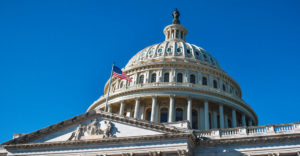
The law aims to protect Americans by blocking and prohibiting all transactions from any social media company in, or under the influence of, China, Russia, and several other foreign countries of concern.
The awards to four tech companies have sequential contract numbers, so the $9 billion bandied in the press really looks like $36 billion.

Most contractors the Department of Defense hired in the last five years failed to meet the required minimum cybersecurity standards, posing a significant risk to U.S. national security.
Sens. Gary Peters, D-Mich., and Rob Portman, R-Ohio, introduced the legislation that seeks to address open source software risks in government. The proposed Bill, S. 4913, now awaits action by the Committee on Homeland Security and Governmental Affairs.
 Loading ...





















Social Media
See all Social Media